
Every bolt on an aircraft carries a load calculated long before the part reaches the assembly floor. If the thread pitch, material grade or head form moves slightly away from the drawing, the joint behaves differently from the intended design. This is why engineering teams turn to Upsind aerospace fastener manufacturer support for parts made true to required specification.
Aerospace assemblies operate through wide temperature swings, constant vibration and repeated pressurisation cycles. A fastener which matches its specification in dimension, material and performance keeps the joint secure across all of these conditions. Upsind aerospace fastener manufacturer capability gives procurement and design teams one source for standard and drawing-specific parts, with documented quality made available at every stage. Here is how the right specification becomes dependable flight hardware.
Why Flight Hardware Calls for Exact Dimensional and Material Control
Tolerances Set at the Design Stage: Aerospace fasteners are made to tight dimensional tolerances because the clamp load in a joint depends on thread form, shank diameter and head bearing area working together. A shank which sits a few microns outside its limit changes how the joint shares load. So engineers specify every dimension on the drawing, and the manufacturer holds each one through production and inspection.
Material Grades That Match the Operating Environment: The material grade of an aerospace fastener decides its strength, corrosion behaviour and response to heat. Alloy steels, stainless grades and heat-resistant alloys each suit a different zone of the aircraft. Before a new part number moves to volume supply, first article inspection confirms that the first production piece matches every drawing requirement, from dimensions through to material certification.
Settling Specifications Early in the Programme: In everyday aerospace procurement practice, quality teams often see fastener specifications left open until late in a build and then finalised under schedule pressure. When the governing standard, material and finish are fixed at the drawing stage, sourcing stays flexible, approval cycles move faster and the assembly line receives parts which fit correctly the first time they are installed.
A Fastener Range Built around NAS, MS and AN Standards
Standard Parts Defined by Recognised Specifications: NAS, MS and AN fasteners are aerospace standard parts defined by the National Aerospace Standard, Military Standard and Army-Navy specification systems. Each part number fixes the dimensions, material, finish and test requirements, so a part from one approved source matches a part from another. The range covers all three families, along with fasteners made to customer drawings.
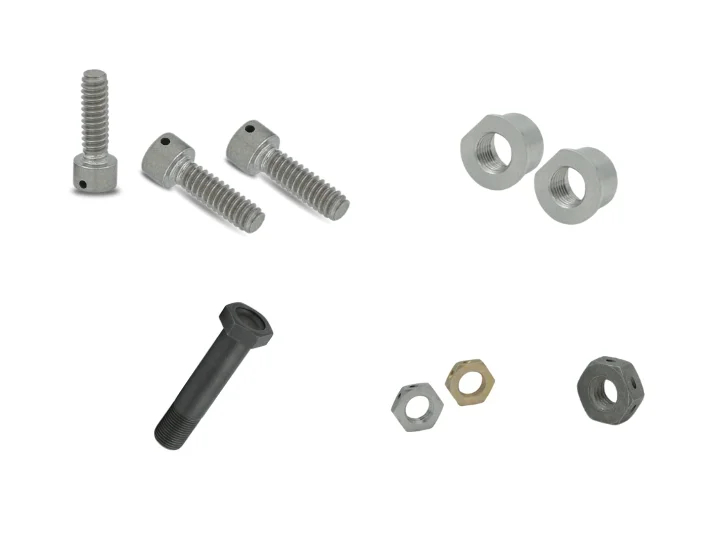
Bolts, Screws and Nuts for Specific Joint Designs: Hex-head bolts suit structural joints with open wrench access, while socket-head screws fit recessed spaces. A jam nut locks a standard nut in place under vibration. Bi-hexagonal parts carry a twelve-point head which suits engine bays where tool swing is limited. With Upsind aerospace fastener manufacturer supply, all of these come from one source in metric and imperial sizes.
Matching Fastener Specifications to Component Drawings and Assembly Needs
Standard Part Numbers or Drawing-Specific Parts: A standard NAS, MS or AN part is the practical choice when the joint fits a catalogue size, because approval is faster and interchangeability is built in. A custom part made to draw suits joints with unusual lengths, special finishes or non-standard head forms. Custom parts take a longer approval path, and in return they give a closer fit to the design intent.
Reading the Drawing before Placing the Order: Engineering teams get the best match when the drawing states the governing standard, material specification, finish, thread class and any locking feature. Assembly requirements such as installation torque, tool access and service intervals should sit alongside these details. If a drawing calls out an AS or NAS reference, the manufacturer can confirm conformance before the first blank is cut.
Certified Manufacturing That Supports Long Service Life
Quality Systems Recognised across the Aerospace Sector: AS9100 is the aerospace quality management standard built on ISO 9001, with added controls for configuration, product safety and counterfeit part prevention. NADCAP accreditation covers special processes such as heat treatment and surface finishing. Production under these systems, supported by supply chain traceability from raw material lot to finished part, gives procurement teams clear visibility over every delivery.
In-House Testing and Export Readiness: Laboratory testing on site checks hardness, dimensions and mechanical properties, and each consignment can ship with material certificates. This record supports long-term fleet value, because maintenance teams can match replacement parts to original data years later. Upsind aerospace fastener manufacturer operations already serve customers in India, Europe, the UK and the USA with this documentation in place.
What Procurement Teams Gain from a Specification-Led Supplier
Procurement teams which compare suppliers on specification control rather than unit price alone usually see steadier build schedules and smoother approvals. The points below sum up what Upsind aerospace fastener manufacturer capability brings to an aerospace sourcing plan, from the first enquiry through to repeat orders for the same part number.
- One source for NAS, MS and AN standard parts alongside fasteners made to customer drawings.
- Carbon, alloy and stainless steel grades selected to suit the operating zone of each assembly.
- Production under AS9100 and ISO 9001 quality systems with NADCAP-accredited special processes.
- The laboratory checks on hardness, dimensions and mechanical properties before each dispatch.
Turning Your Drawing into Flight-Ready Hardware
Fasteners made to the exact standard, material and finish on the drawing give your assemblies secure joints and clean audit records from the very first build. Each week a specification stays unconfirmed, the choice of qualified sources and delivery windows usually becomes narrower. Share your component drawings and assembly requirements with the engineering team today to discuss the right fastener solution for your programme.