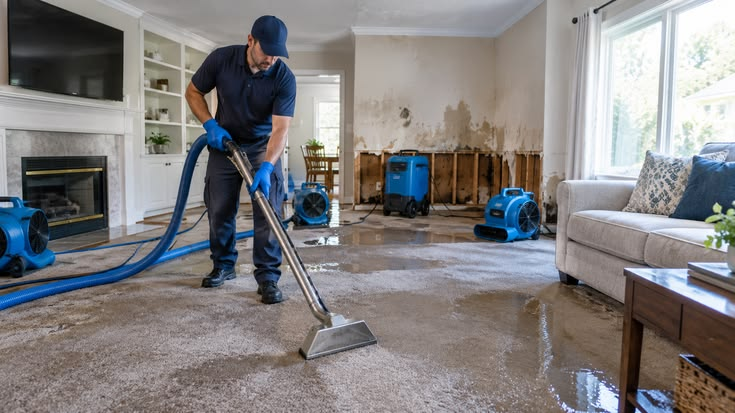

Water damage is one of the sneakiest ways your property can be damaged. It may come as a result of bursting pipes during an extremely cold winter, a malfunctioning water heater, or runoff from the mountains during spring time. Whatever the cause, water damage in your house or business needs to be addressed right away.
Getting a professional water damage restoration service in Boulder right after you detect moisture will save your investment and help preserve the structure’s integrity. Understanding this and contacting Restoration Logistics Boulder will help property owners avoid bigger issues.
Image Source: Pinterest
The Quick Timeline of Water Destruction
Water attacks swiftly and continuously, creating an increasing level of damage that happens on an ever-decreasing timeline. Recognizing how water interacts with construction materials makes clear why immediate containment is important.
First 24 Hours: Instant Saturation and Deterioration of Materials
Within only a few minutes after a leak occurs, water travels through permeable surfaces in order to penetrate into carpets, hardwood floors, fabrics, and drywalls. Within the first 24 hours, drywalls are drenched in water causing bulges, sagging and degradation of the material.
Warping of wooden materials begins; degradation of painted surfaces is witnessed and electrical components become very hazardous. Moreover, moisture provides a perfect condition for the growth of mold spores.
48 hours to 1 Week: Microbial Growth and Structural Deterioration
From 24 hours up until 48 hours, if water damage is not stopped, the situation will become very hazardous. This is when mold spores begin to germinate and spread via HVAC systems and the walls.
Subfloors will warp and peel off and the plaster walls will deteriorate. Structural timber becomes saturated with water causing wood decay and compromising the structure’s strength.
Explosive Economic Costs: Remediation versus Reconstruction
Failure to make immediate efforts results in a drying process becoming a costly reconstruction endeavor. The economic disparity between water extraction and reconstruction is huge.
Cost Escalation in Structural Repair
Early stages of mitigation will include water removal, special dehumidification and small repair work. Property owners are not only paying for drying processes like drying the drywall and carpet but also have to incur costs of gutting, frame rebuilding, subflooring and total re-plastering.
Early use of a professional water damage restoration service in Boulder will help in saving original materials through drying equipment before they are demolished.
Hidden Water Damage Behind Walls and Under Floor
Water always flows where there is the least resistance, and it pools up in places such as wall cavities, crawl spaces, and under the hardwood flooring. Even though it may seem like everything is dry, the water remains there causing damage to the property from the inside. The professionals dealing with water damage use thermal imagery and moisture meters to find any sources of water that are trapped.
Health Risks and the Possibility of Poisonous Mold Growth
In addition to monetary losses, postponing the restoration process of water damage results in serious health threats to the occupants of the structure.
Faster Spread of the Mold Spores
It is a natural phenomenon for mold spores to be present in the air, but what is needed for mold growth is moisture, heat, and organic materials. When water starts providing the required moisture, the mold will begin to grow very quickly, and mold spores will move through the air flow and spread to other parts of the building.
Respiratory Risks and Indoor Air Quality
The presence of high concentrations of molds causes respiratory diseases, allergies, chronic sinusitis, and asthmatic episodes. Exposure to toxic black molds is a source of serious neurotoxic and systemic health hazards. Mold remediation will be carried out by creating negative pressure and using HEPA air filtration.
Challenges of Claim Filing and Policy Coverage Denial
Property owners usually believe that their homeowners’ insurance policy will pay for water damages at any time once they file a claim. Delays in filing a claim greatly increase the complexity of the claims process.
Claim Negligence and Insurance Requirements
Homeowners insurance policies normally cover damages caused by accidental or unintended water release like when the supply line bursts. However, the insurance contract clearly states that the insured party is supposed to put up efforts in ensuring that no further damage is caused.
If the insurance adjuster finds out that the additional damage occurred due to the delay in notifying the water damage restoration service in Boulder about water damage, the claim may be denied.
Handling of Documentation and Claim Approvals
Successful claim management depends largely on well-structured restoration logistics required by adjusters, such as moisture measurements, psychrometric calculations, and inventory listing of damaged property. The delay of this process makes it hard to establish the true cause of damage, leaving the owner responsible for paying for restoration costs.
Complicated Restoration Logistics of the Boulder Area
Water restoration in the Boulder area is associated with planning, proper equipment use, and compliance with local rules. Proper organization of these aspects is impossible without the knowledge of local conditions.
Seasonal Effects and High Altitude Drying
The particular climate of Boulder causes specific problems when drying buildings. Freeze and thaw in winter are linked with burst pipes, whereas snow melting in the spring season results in more moisture entering the basement.
Furthermore, high altitude affects humidity and pressure, which affect the rate of moisture evaporation. The use of scientific calculations is mandatory to properly adjust the equipment.
Local Building Codes and Regulatory Compliance
The property repair jobs in Boulder have to meet stringent local building codes, environmental safety regulations, and asbestos compliance, especially for properties that were constructed prior to 1990.
This requires coordination with regards to waste removal, drying of structures, and hiring of contractors. Working with a water damage restoration service in Boulder guarantees that all these will be handled according to local laws.
Conclusion
To ignore water restoration services is an expensive option that results in more severe issues such as structural damage, health risks, and lower insurance claims. Water will always be the one to ruin the quality of the construction material, bring about mold infestation, and increase repair costs with every passing minute.